Suspension
The looping trains…
Oh, it’s like a never-ending nightmare…
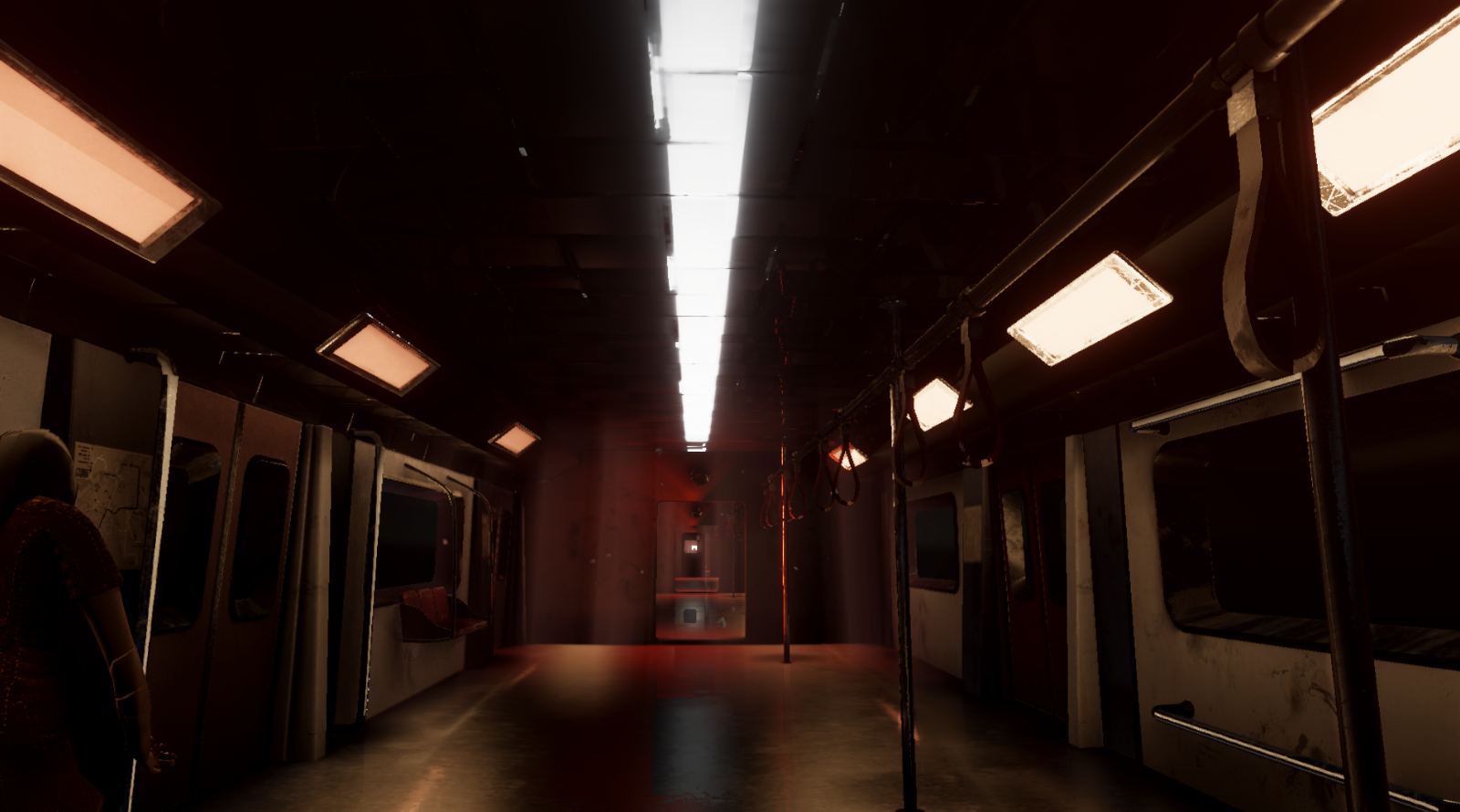
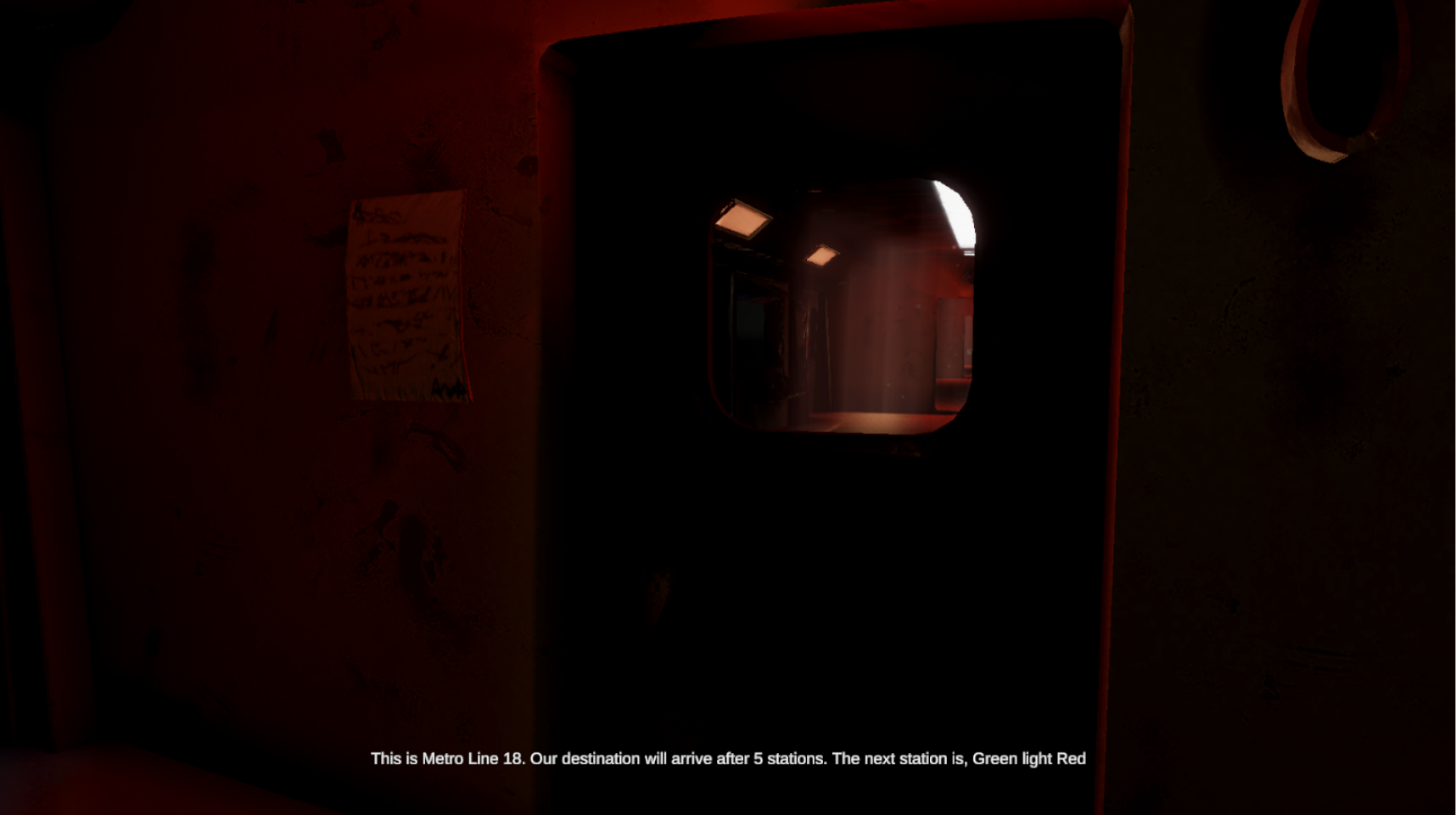
Suspension is a single-player, 3D First Person, horror game with puzzle-solving elements. Players will wake up inside the mysterious metro cart and find themselves trapped in a nightmare loop; with the attack from a weird doll, they must try their best to escape the Metro to put an end to everything.
Developed 8 weeks · Tools: Unity, Machinations
Roles: Level Design / Game Design
Pre-Production & Philosophy
As a puzzle enthusiast, I believe the core appeal lies in the epiphany—that sudden 'Aha!' moment. This moment provides the intense intrinsic reward that drives Homo Ludens to engage with puzzles. Yet, the journey to reach that point is often paved with friction and frustration.
Don't get me wrong, players can absolutely find a great 'flow' during the journey, but that isn't always the case. If we look at the data, our first priority is making sure the player 'survives' the journey.
Some designers try to fix this by lowering the frustration levels. But the problem is, this often lowers the challenge too, killing the thrill of that 'Aha!' moment. Other designers choose a different approach. Instead of just making things easier, they change the nature of the puzzle. They use Knowledge Locks, Cognitive Interference, or even let the player mess with the rules.
For our approach, we focused on the journey itself. We asked ourselves: How can we make this process more pleasant and less frustrating?
During pre-production, we held a meeting to find a 'painkiller' for the struggle of solving puzzles. That’s when my background in psychology kicked in. My instinct gave me the answer immediately: Endorphins and Dopamine.
And just like that, a genre fusion was on the table: Horror.
“Horror is the painkiller.
Think about horror games for a second. The core loop is built on Tension and Release. The designer builds up the pressure until the player can barely take it, and then—release. Hard puzzles work the exact same way. The 'frustration' phase is just the Tension. Without that buildup, the 'Aha!' moment (the Release) wouldn't feel nearly as satisfying. We need the struggle to make the victory taste sweet.
After deciding to experiment with a puzzle game infused with horror elements, we had to ask ourselves: 'What differentiates us from all the other horror-puzzle games on Steam?'
Our answer defines our philosophy: Horror is the painkiller.
In our game, horror serves as emotional support to help players survive the cognitive struggle of the puzzles. It shouldn't be the player's burden; instead, the horror elements should be their fuel.
Isn't that ironic? Using fear to comfort the player?
Usually, horror drains you. But here, the adrenaline spike from the horror provides the energy boost needed to power through the logic puzzles.
Core Pillars
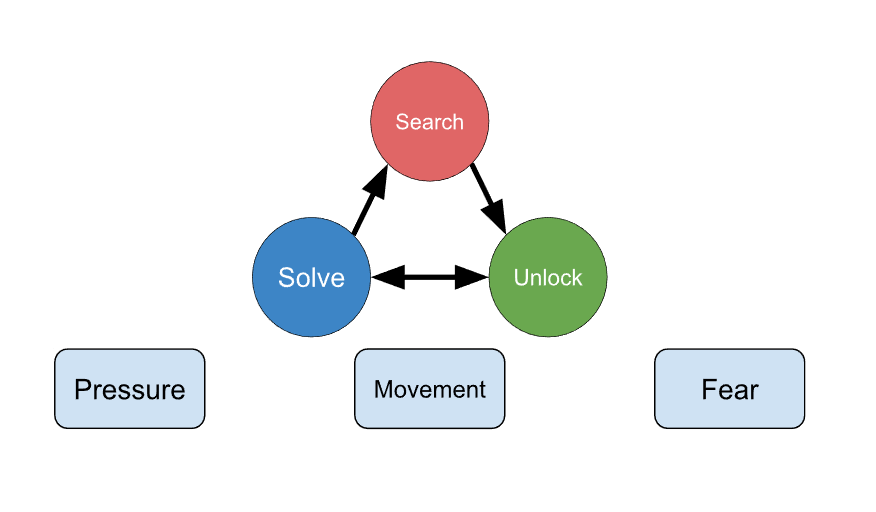
- Pressure: The Sweet Spot of Tension
In traditional horror, pressure is often overwhelming. But for us, pressure is a tool for focus, not exhaustion. We use atmosphere and enemy presence to keep players attentive—giving them enough adrenaline to solve puzzles, but not so much that they freeze up. It’s about maintaining 'immersion,' not inducing trauma.
- Movement: Grounded & Deliberate
You can't feel fear if you can fly across the room like a superhero. We tuned our movement to be grounded and slightly slower. This gives weight to the character and makes every step a deliberate choice. We don't want players to feel overpowered; we want them to feel present. The slower pace forces them to absorb the atmosphere—the 'fuel'—rather than rushing past it.
- Fear: Context is King
Horror shouldn't be a jumpscare mini-game separate from the actual gameplay. In our design, fear follows immersion. We embed horror directly into the narrative flow. Every puzzle links back to the story, so when you are solving a logic problem, you aren't just matching shapes—you are engaging with the terrifying reality of the world.
The Reality of Production
However, once we entered production, reality hit us hard. We had 8 weeks to build this. We thought we were ready, but we soon realized it wasn't that easy.
“In the end, we failed. And we failed badly.
We didn't fail to ship a finished project. We failed because we compromised. Under the pressure of time and skill limitations, we lost our original vision. Instead of a revolutionary puzzle game fueled by horror, we ended up making just another generic horror game with puzzle elements.
But what we tried and what we learned—that is the real treasure. I truly believe that in the future, we will reclaim that vision and build a true puzzle game using horror as its PAINKILLER.
Looking back, let's break down the specific obstacles that derailed us—what we encountered, and how we fought back.
Design Obstacles & Iterations
The Calibration Nightmare: Subjective Fear
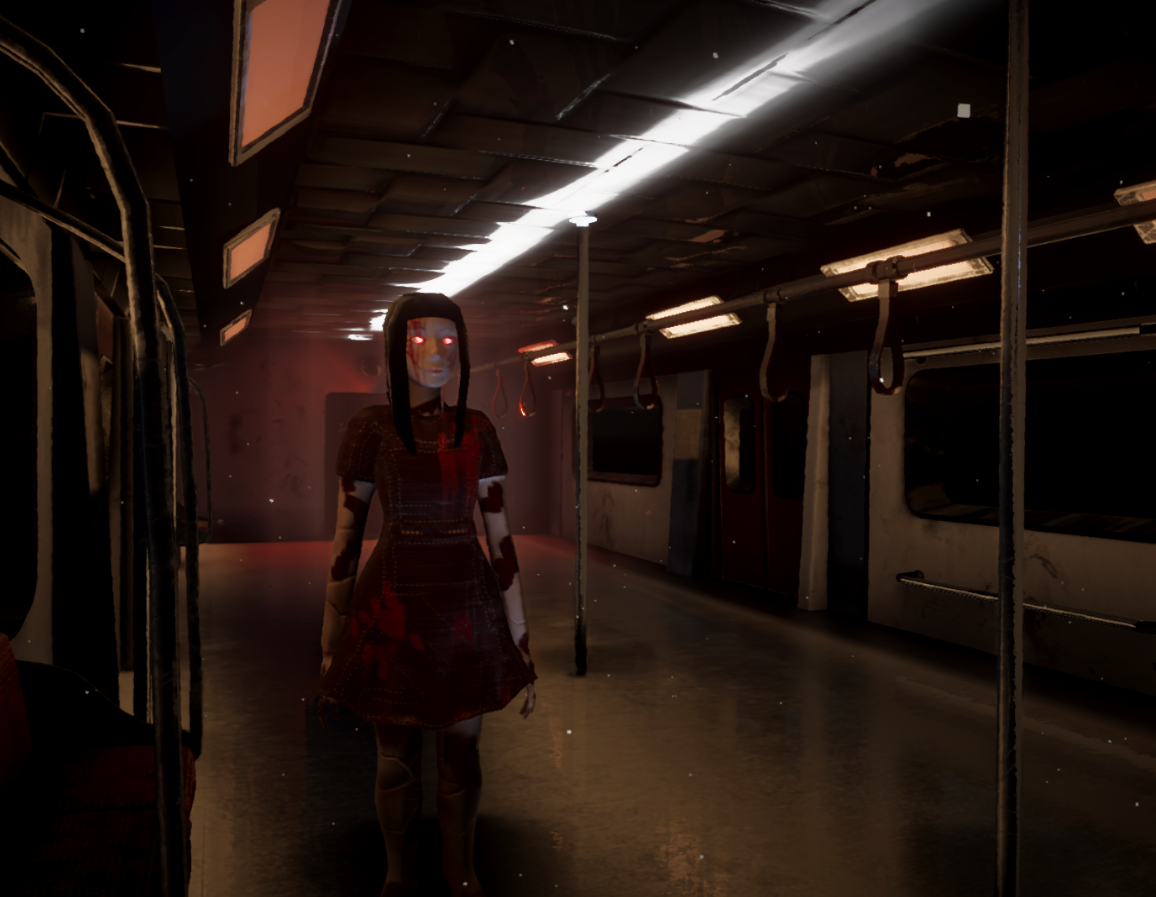
Once our systems were in place, we moved to playtesting. Our goal was simple: observe the players to find that 'sweet spot'—giving them enough adrenaline to sharpen their focus, but not enough to make them freeze up.
However, reality gave us a harsh lesson: the spectrum of player tolerance is incredibly wide.
On one end, we saw players completely lose their cognitive ability just from a shift in atmosphere—simple things like minor-key music or dim lighting were enough to shut their brains down. On the other hand, we had players who were completely immune. They walked through our 'scary' environments and felt absolutely nothing.
→ The Solution: A Semi-Dynamic 'Director'
To tackle the wide spectrum of player tolerance, we implemented a Semi-Dynamic Horror & Puzzle System. This system acts like an invisible director, monitoring player metrics in real-time—specifically 'Stuck Time' and 'Movement Patterns' (e.g., how long they dwell in specific regions like safe rooms).
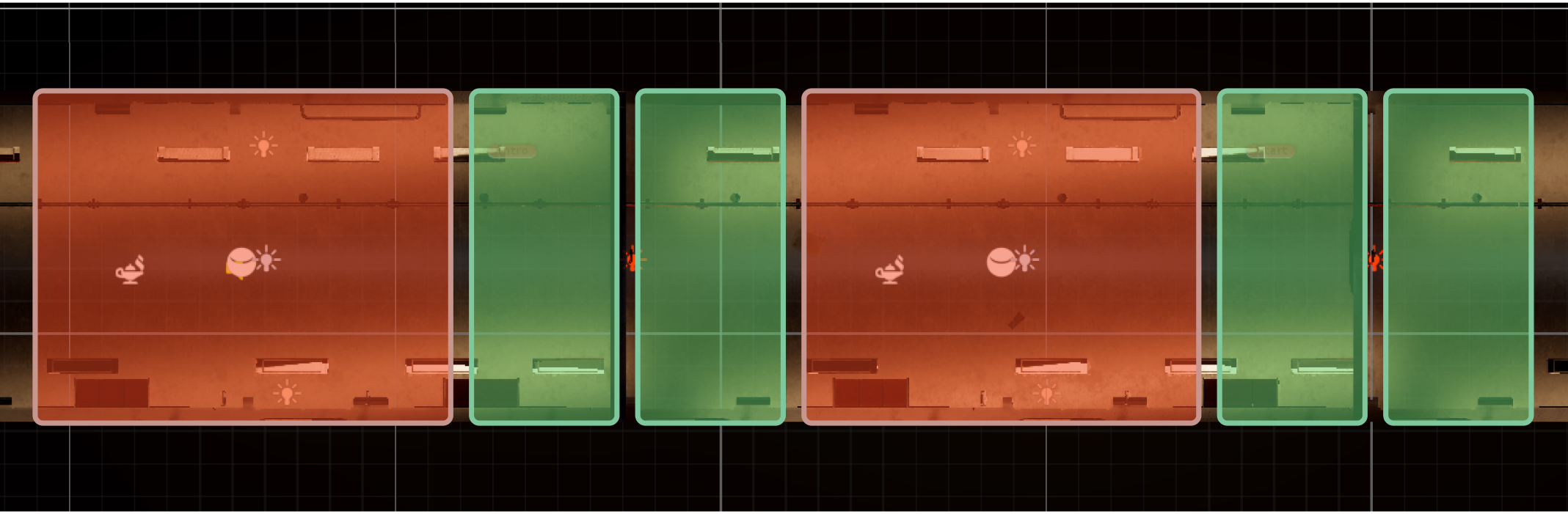
Based on this data, we dynamically throttle the horror intensity and puzzle hints.
The 'Camper' Scenario: If a player hides in a safe area for too long and refuses to step out, we reduce the horror elements outside. We have to remember: Horror is the seasoning, not the main dish. We need them to feel safe enough to leave and engage with the puzzles.
The 'Stuck' Scenario: If a player takes consistently longer than average to solve 2-3 puzzles, we interpret this as cognitive overload. The system then dials back the horror to free up their brainpower.
The Cognitive Tax
We soon discovered a double-edged sword. On one hand, the horror elements undeniably worked: they created a real sense of urgency, forcing players to act fast.
But on the other hand, we saw a drastic drop in cognitive performance. When players are under extreme pressure, their ability to analyze logic and solve complex puzzles plummets. Their higher brain functions shut down as their 'fight or flight' instincts kick in. We had solved the 'boredom' problem, only to fall into another rabbit hole.
“High arousal equals low performance on complex tasks.
— The Hard Lesson
→ The Band-Aid Solution
To counter this, we had to implement a multi-layered hint system (Visual cues, Audio feedback, and Environmental storytelling) and, inevitably, lower the raw difficulty of the puzzles.
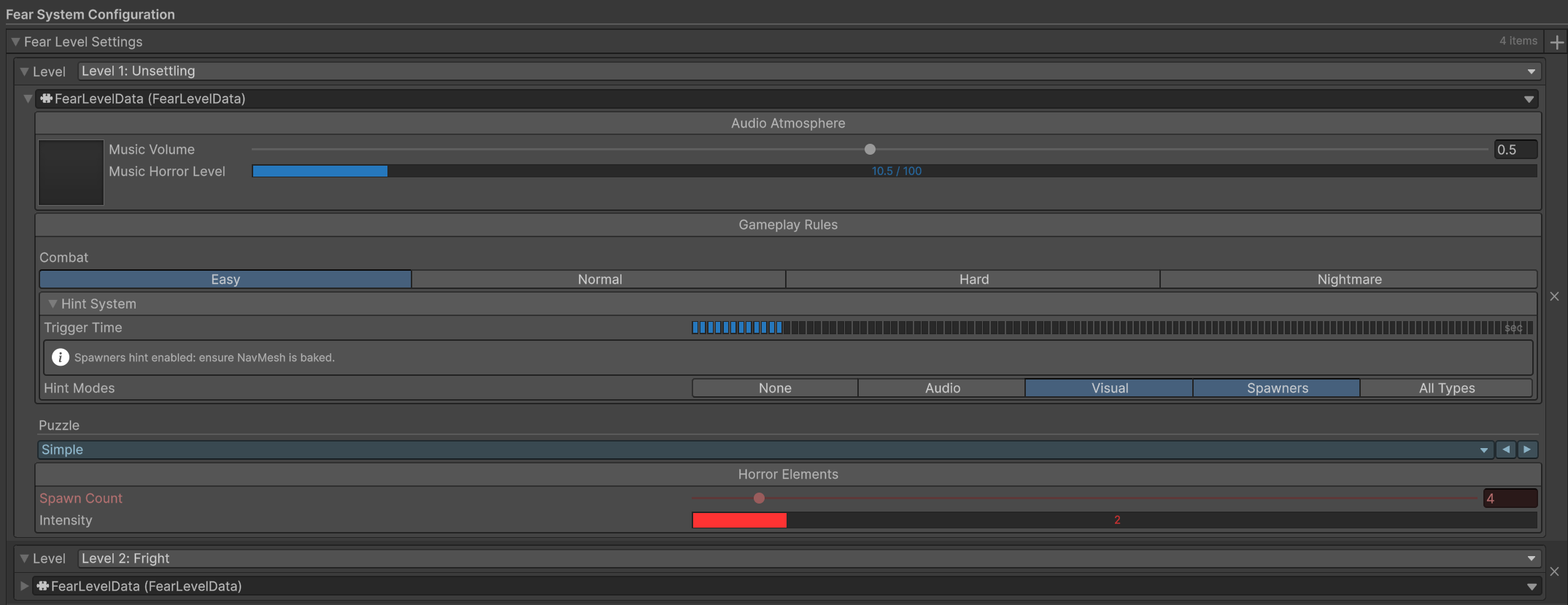
This was a painful decision. By lowering the difficulty to accommodate the fear, we felt like we were betraying our original vision.
The Designer’s Curse: Bias vs. Reality
The final obstacle was defining the 'Average Solving Time.' This sounds simple, but as designers, we were the worst possible judges of our own game.
We suffered from The Curse of Knowledge. We knew the solutions inside out. We had tested these levels hundreds of times. So, when we set our initial baseline for how long a puzzle should take, our estimates were severely biased and unrealistically fast.
We only realized the gravity of this error during Blind Playtests. Watching fresh players struggle with what we considered '5-minute puzzles' was a humble wake-up call.
→ The Fix
We had to throw away our intuition. We started collecting raw data from these blind tests to establish a new, empirical baseline. We analyzed the numbers not just for speed, but for pacing—eventually finding a calculated average that didn't just look good on paper, but felt right in practice.
Visual Engineering: The Stack
Atmosphere isn't created in a single click. It is engineered layer by layer.
Moving from the raw render to the final nightmare.
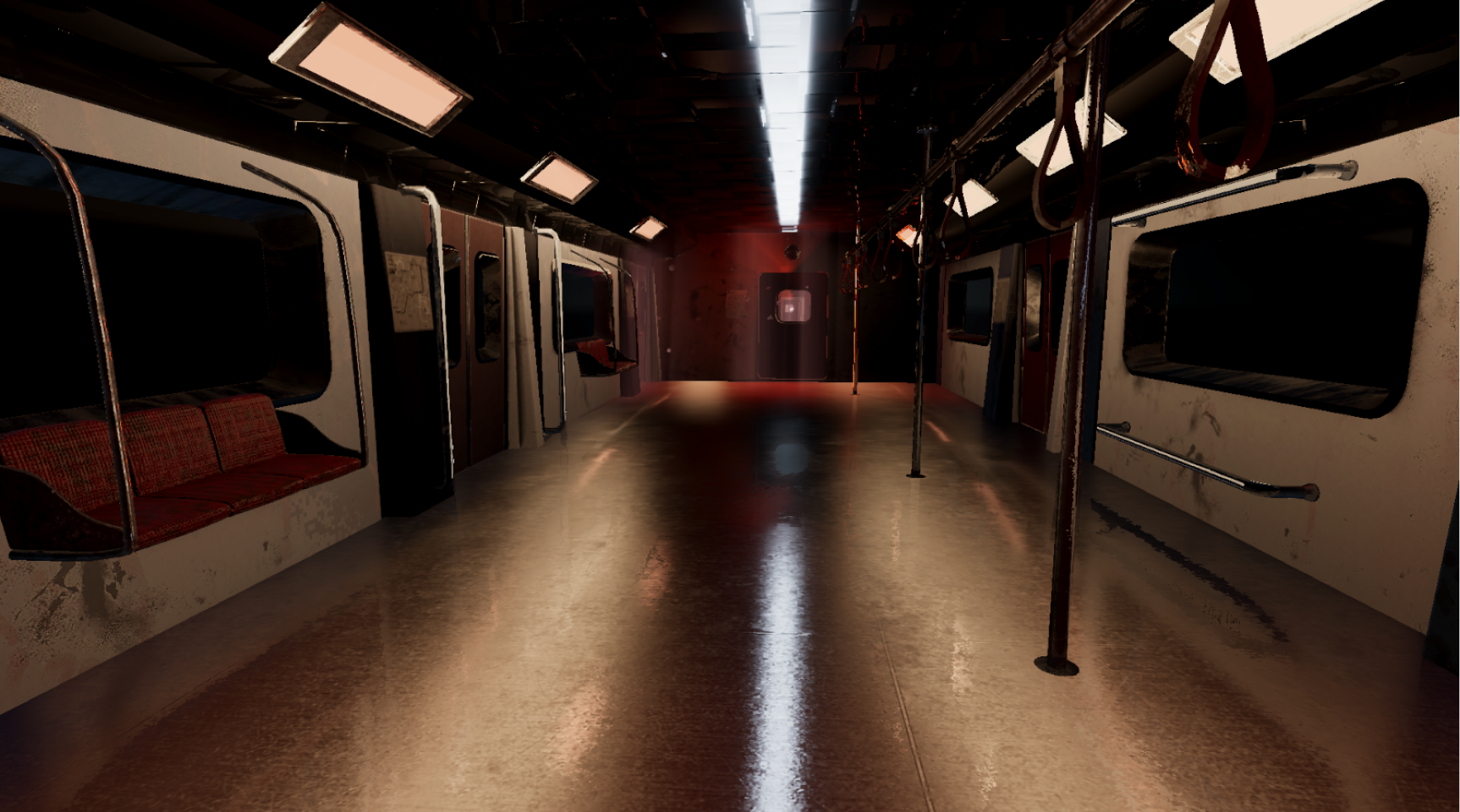
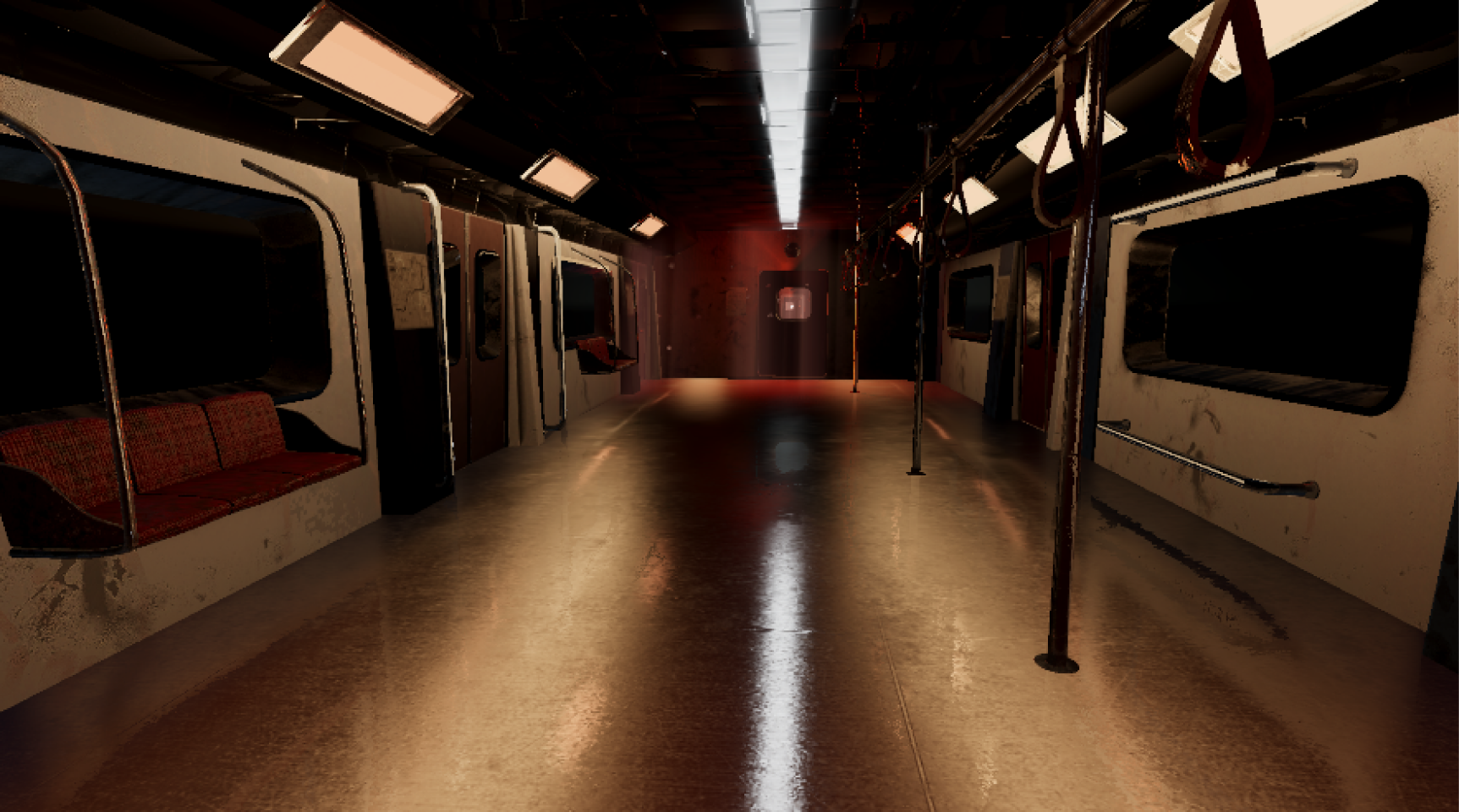
Temperature Shift
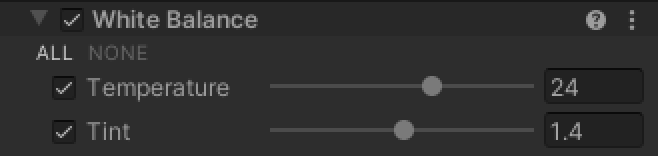
The raw scene felt too clinical. I utilized White Balance to shift the Temperature (+3000) towards orange, infusing the scene with a touch of warmth.
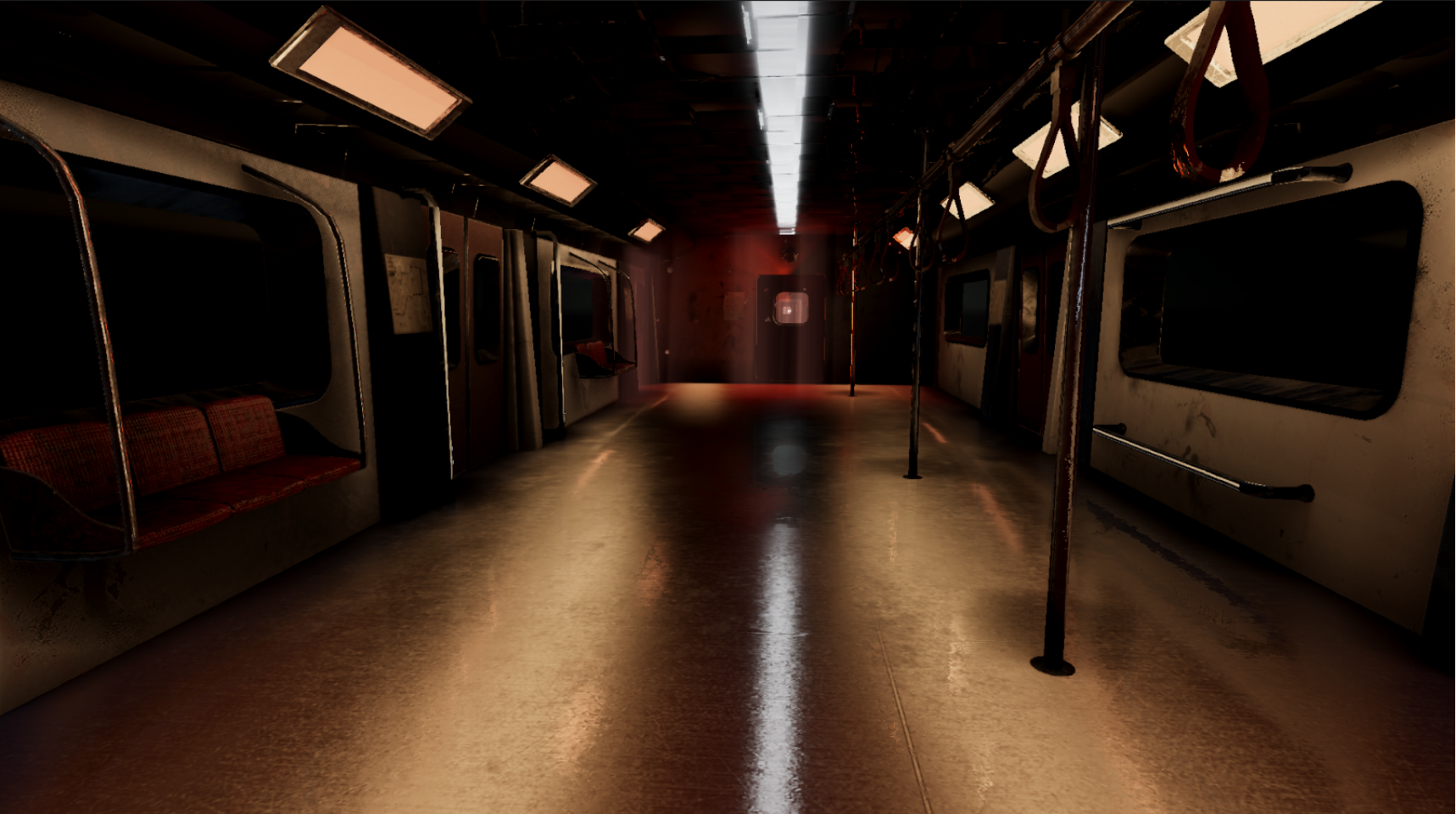
Grounding Geometry
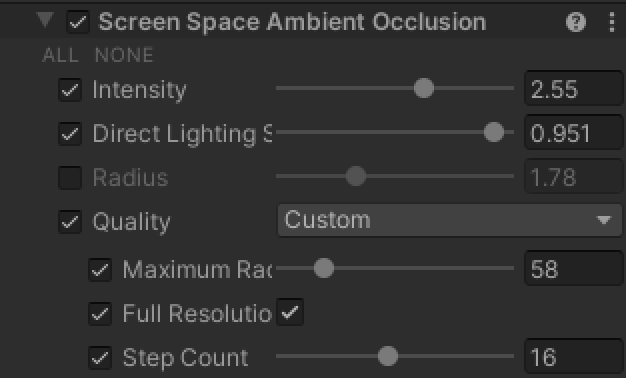
I applied SSAO to accentuate the highlights while deepening the shadows. This heightened contrast shrouds the dark corners in mystery, amplifying the fear of the unknown.
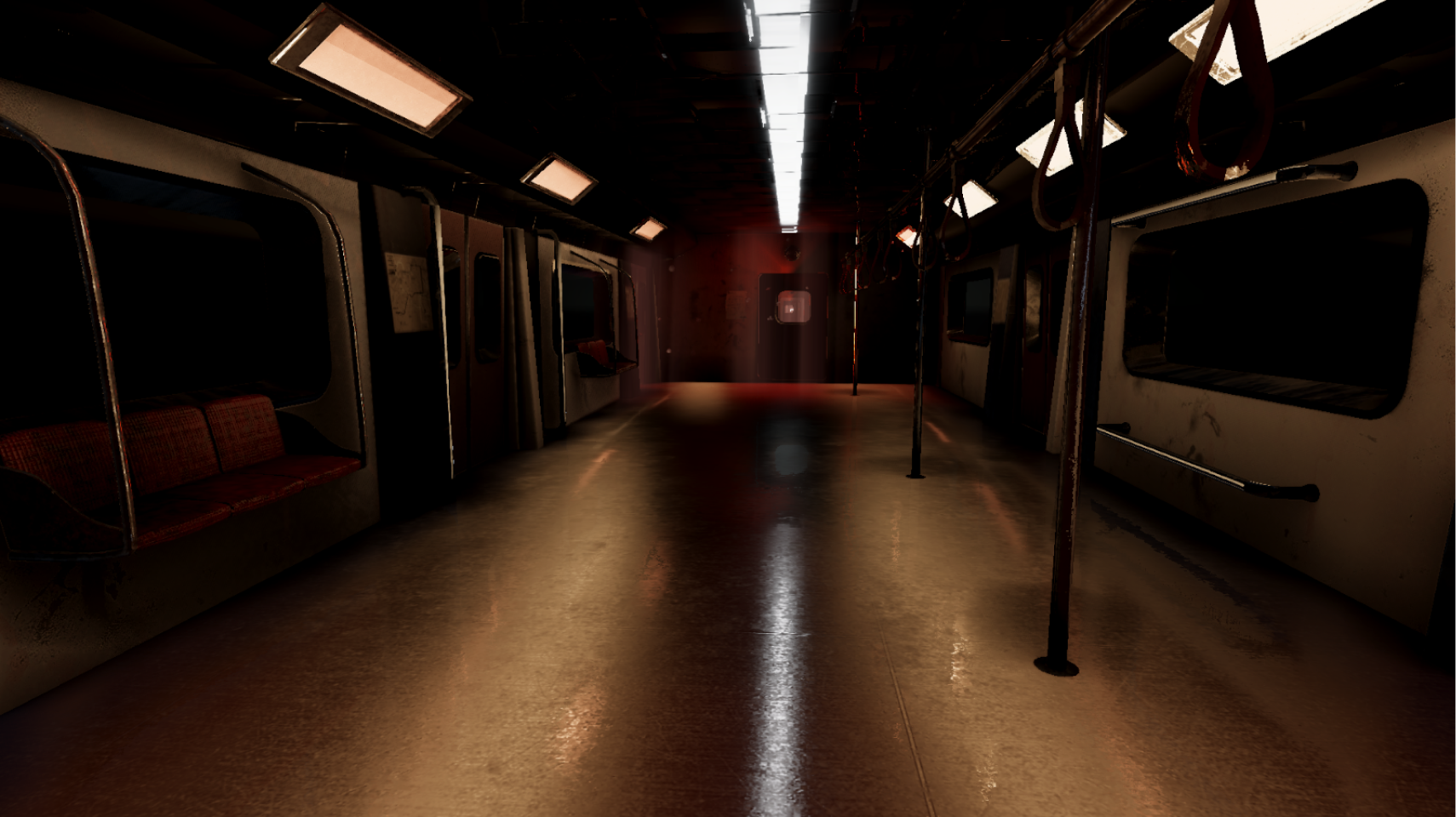
The "Sickly" Palette
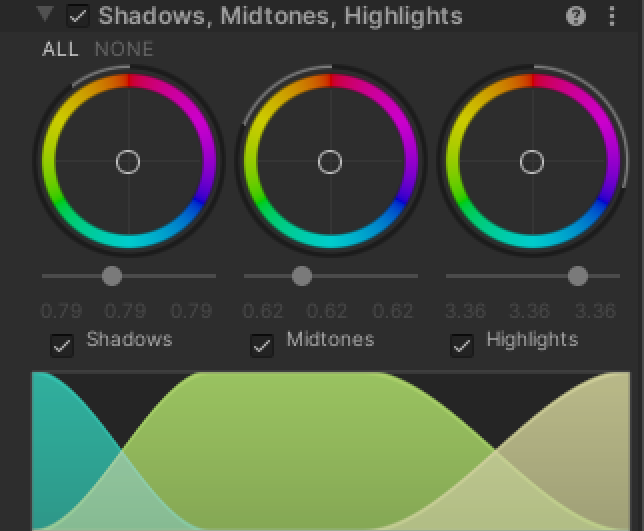
Aggressively adjusting shadows to deep teal and midtones to yellow-green to mimic the uncomfortable lighting of fluorescent tubes.
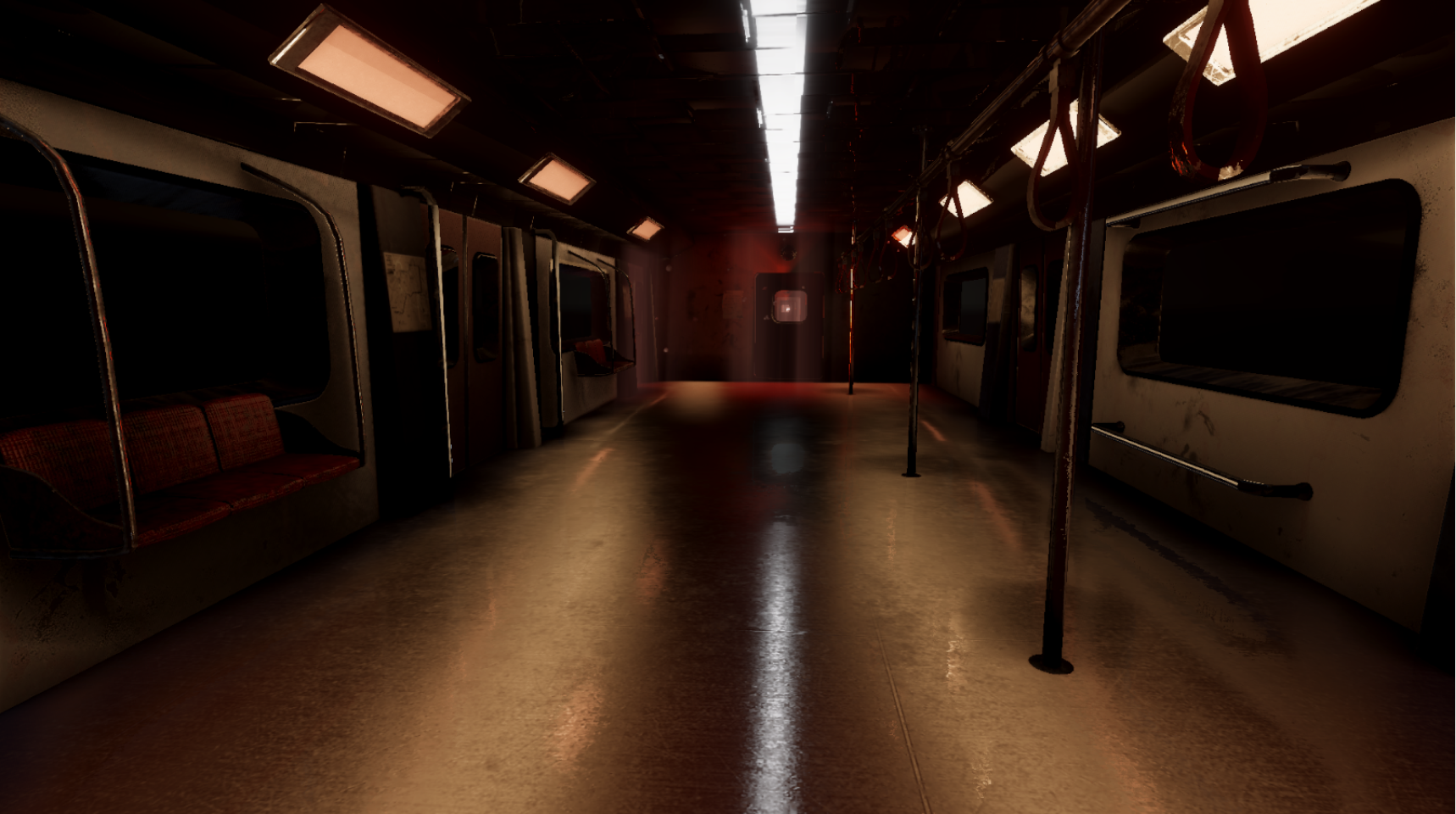
Hazy Atmosphere
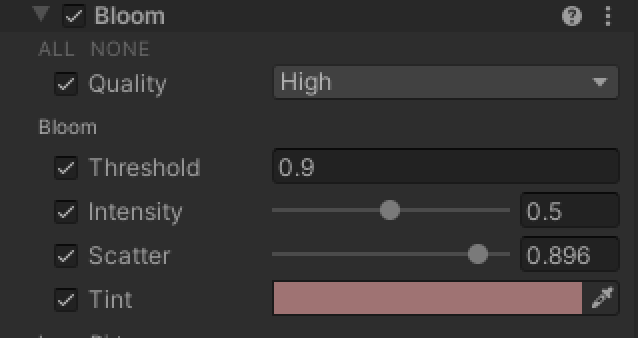
Added Bloom with a high intensity (4.0+). It bleeds the light into the dark areas, simulating a dusty, humid environment.
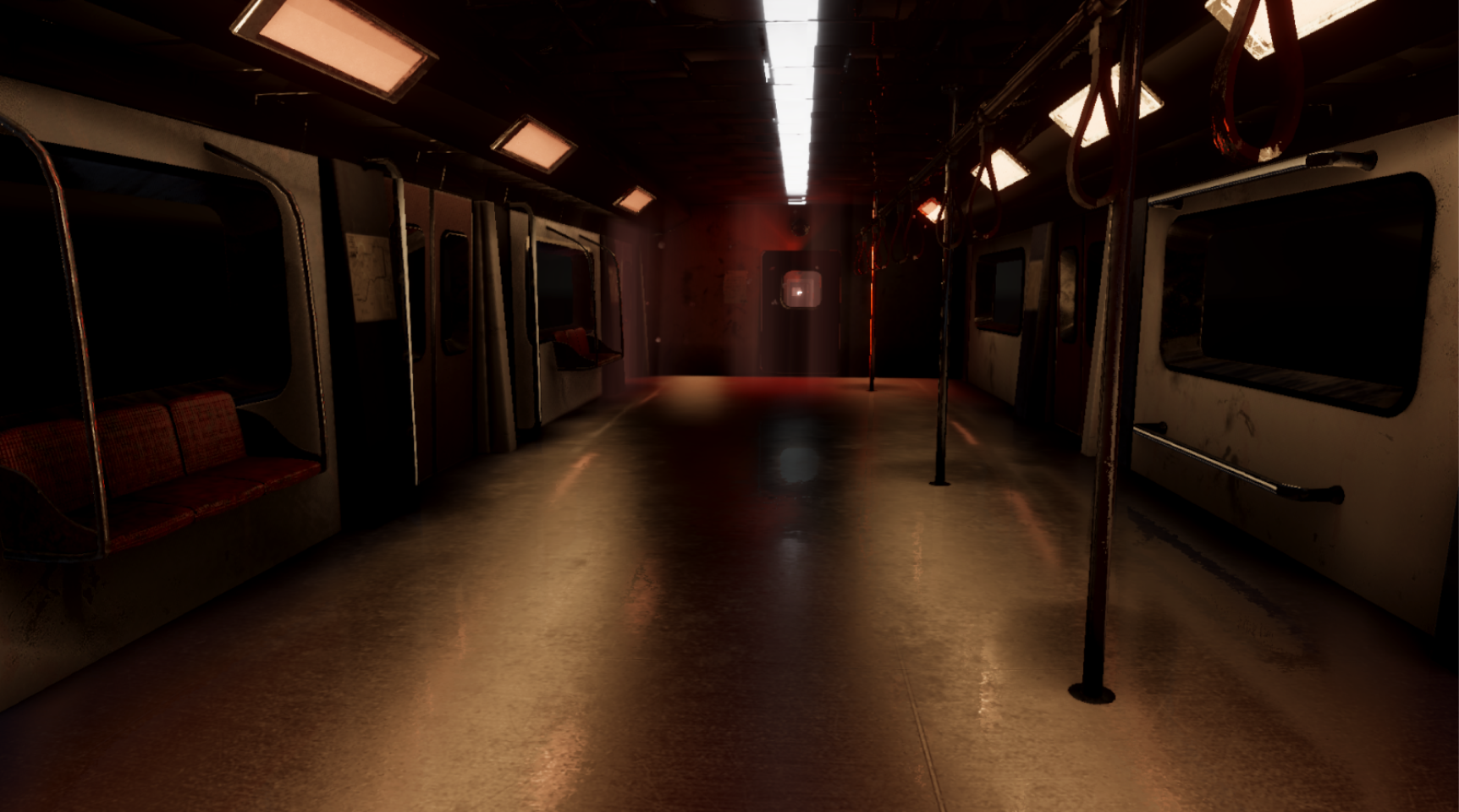
Focusing the Eye
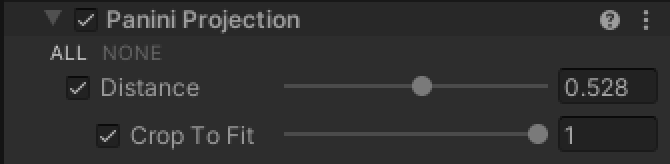
I applied Panini Projection to warp the peripheral perspective. This distortion simulates the disorienting "tunnel vision" of high stress, physically compressing the edges to force the player's focus directly onto the threat.
Retrospective
Looking back at these 8 weeks, it would be easy to say we failed. We compromised on our vision, we struggled with the balance, and we ended up with a game that was far from the revolutionary experience we imagined.
But as I said at the start, what we learned is the real treasure.
We now know that Horror is indeed a potent Painkiller for the puzzle journey—but only if the dosage is precise. We learned that players aren't just logic machines; they are emotional beings whose intelligence fluctuates with their heart rate. And we learned that our own intuition is often the biggest trap of all.
We didn't ship the perfect game this time. But we have built the framework for one. I still believe in our original philosophy. In the future, armed with these hard-won lessons, I know we will build a true puzzle game where fear isn't a burden, but the ultimate fuel.
The experiment continues.